
Pass it on
The following is a true story. Nothing has been changed or altered for the sake of drama, entertainment, or sympathy.
In fact this is just a thoroughly, provable, document of instances depicting rationalities abandonment, which exist within this singular encounter; everything accompanied by empirically verifiable citations and objectively articulated so as to be recognized and identified as the familiar, common, slice of life scenario that most people will recognize and be capable of reciting if vaguely the from start to finish. Each story beat like you’ve been here in my shoes once upon a time but the experience was so surreal in its content — so alien and divorced from the rest of reality in implication and intelligent humanity — the mind will have trashed it the way it handles most "static" and meaningless. The same would have happened here as well if I hadn’t taken steps to preserve it in all it’s ludicrousness so that I stood a small chance of integrating and reconciling what’s taken place.
The following is the result of that endeavor. The following is one individual’s experience of how surreal things can become during interactions with a companies customer service representative if you can manage to make no "mistakes", remain calm, and satisfy all requirements placed on you by them, no matter how irrational, illogical or unreasonable especially within the context of their totality. It’s not our burden to make sense out of nonsense just because that nonsense originates from a position of authority.
It’s what happens should you play by their rules, no matter how arbitrary and made-up.
The abomination of the result will speak for itself with a voice tuned to the right people who are readied and waiting like night watchman for the signal that injustice is on the move.
And targeting ones who held hope.
Hope in the inherent goodness of people and life in general. Hope in seeing God’s love.
After their scripted understanding and warmth, you wonder what’s happened with God’s love? Then, repeatedly, they made it unmistakable that God’s love disappeared. And it’s CashApp who made it disappear.
We have on our hands an absolutely disgusting case study in institutional indifference.
Not the theatrical kind. Not smoke-filled boardrooms or cartoon villains stroking white cats while conspiring against the common man. That version at least has the decency to acknowledge you’re in the room.
No, this is something quieter.
A polite indifference.
An immaculate indifference.
The kind that thanks you for your patience while quietly deleting the relationship between cause and effect.
The kind that assures you your concerns have been documented, your case has been escalated, your voice has been heard, your feedback is appreciated, your matter has been thoroughly reviewed, your frustration is understood, your issue has been logged, your expectations are valid, and your humanity has been recognized…
…right before explaining that none of those things will have any measurable influence on what happens next.
I wish this were satire.
Instead, I have receipts.
Thirteen Dollars
The dispute was worth thirteen dollars.
The story is worth considerably more.
The money ceased being relevant somewhere around the fifth explanation of the same facts.
By the end I wasn’t trying to recover thirteen dollars.
I was trying to determine whether anyone, anywhere inside this organization possessed the authority to discuss the reasoning behind a decision already made in my name.
That search would become considerably more interesting than the refund itself.
The Beginning
Like most people, I began with optimism.
This would be easy.
The package wasn’t delivered to me.
It had been left on the floor of a publicly accessible apartment mailroom despite the apartment number being on the label.
Some shipments disappeared.
The carrier’s own photographs allegedly showed exactly where they had been left.
I documented everything.
Tracking numbers. Dates. The carrier. The circumstances. The merchant. A chronological summary. Specific requests.
I wasn’t vague. I wasn’t hostile. I wasn’t even particularly suspicious.
Surely this was the sort of misunderstanding documentation existed to resolve.
Then something extraordinary happened.
Everyone became incredibly helpful.
Not helpful in the traditional sense. Helpful in the ceremonial sense.
Every representative thanked me. Every representative empathized. Every representative promised to review the evidence. Every representative assured me I would be contacted if additional information became necessary.
Then…
Silence.
A week later my dispute was denied.
Reason: «We were not provided the delivery location.»
I stared at the sentence for an embarrassingly long time.
The delivery location? The delivery location had been the entire subject of the dispute. I wasn’t disputing whether a package existed. I was disputing where it had been delivered.
It felt as though gravity itself had been cited as evidence that apples don’t fall.
Perhaps, I thought, this is merely a misunderstanding. Perhaps someone simply needs the chronology explained one more time. That innocent thought would ultimately carry me into one of the more fascinating anthropological expeditions of my adult life.
The Memory Problem
The first thing I discovered was that customer support possesses a curious relationship with memory.
Every new conversation began exactly where the previous one ended. By which I mean… the beginning.
I would explain. They would thank me. They would review. They would sympathize. Then ask for information already supplied.
Not once. Not twice. Repeatedly.
At first I assumed this was procedural. Eventually I began wondering whether each representative awoke every morning with complete autobiographical memory except for the existence of my dispute.
Mr. Advocate
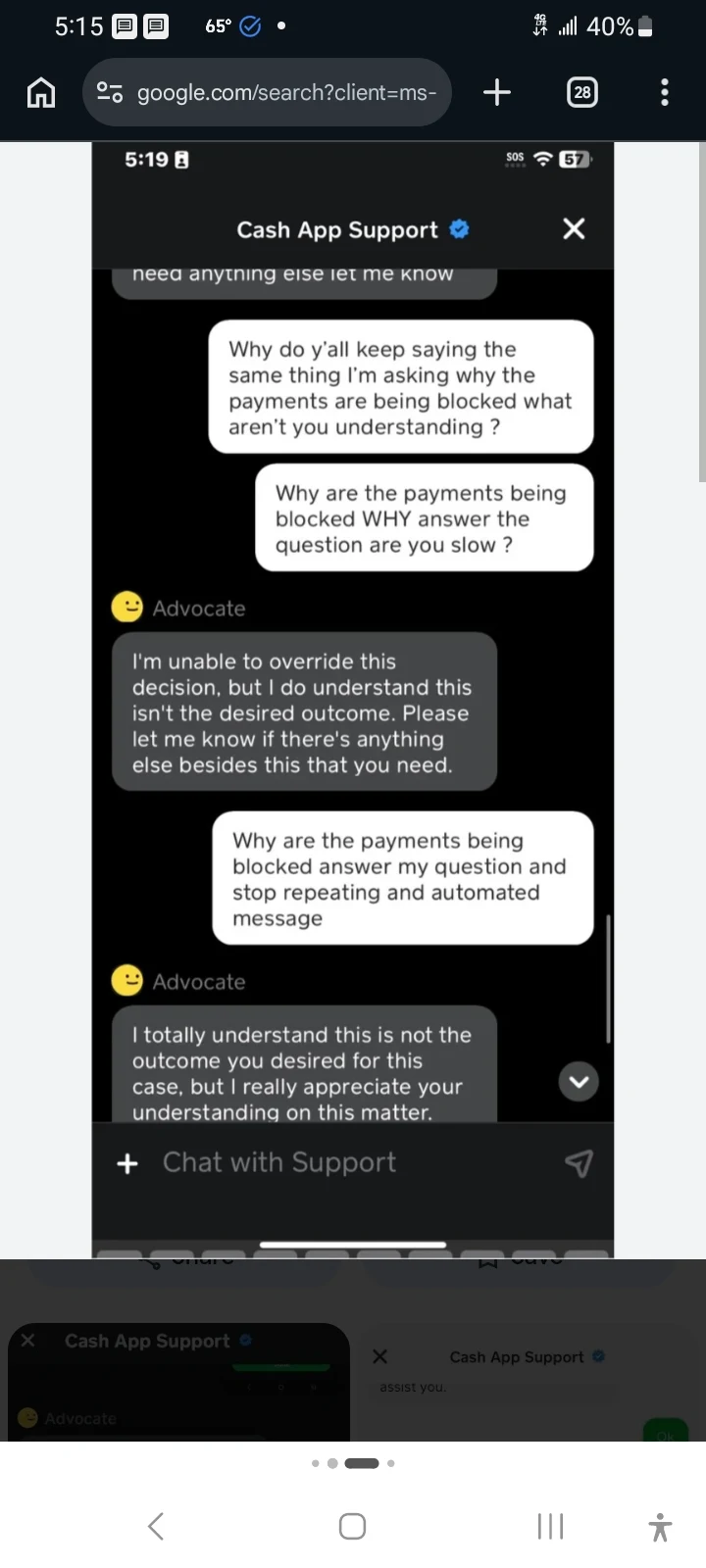
Then I met Mr. Advocate.
Not one man. A title. Like a hereditary office passed from generation to generation.
Each Advocate sincerely understood my frustration. Each Advocate agreed they would probably feel the same in my position. Each Advocate thanked me for explaining everything so clearly. Each Advocate assured me the matter had been thoroughly reviewed.
Each Advocate then redirected me toward the very process whose conclusion I was asking them to explain.
It was less a conversation than a relay race.
No one dropped the baton. No one appeared permitted to run in a different direction.
The Pizza Analogy
Eventually I simplified everything into a pizza analogy.
Imagine paying for a pizza. Imagine the driver leaving it on the floor of a public hallway instead of bringing it to your door. Someone else takes it.
Would you consider that a successful delivery?
I wasn’t asking whether policy allowed it. I wasn’t asking whether chargeback regulations were complicated. I wasn’t asking whether logistics occasionally produce unfortunate outcomes. I was asking whether, in ordinary English, the customer had received what they paid for.
The answer never arrived. The conclusion did. Repeatedly. The reasoning remained somewhere beyond the horizon.
Random Arbitrary Reason
Somewhere around this point another character entered the story.
I call him Random Arbitrary Reason. Not "A random arbitrary reason." Random Arbitrary Reason. A proper noun. A sovereign.
He rules a kingdom where explanations need not correspond to evidence because evidence is merely decorative and often an ugly one.
His decrees descend from above fully formed. Questioning them simply causes them to be restated with greater confidence.
The Paragraph
Then there is The Paragraph.
The Paragraph is immortal. Whenever discussion drifts too close to personality and accountability, The Paragraph materializes.
It thanks you. It appreciates your understanding. It informs you the dispute has been reviewed. It explains that the decision remains unchanged.
It possesses many remarkable qualities. Reasoning is not among them.
The Astonishing Experience
What fascinated me most was not that representatives disagreed with me. It was that they so rarely disagreed at all.
They sympathized. They acknowledged. They apologized. Some even suggested they would have acted similarly in my position.
Then the conversation would quietly slide away from the question itself. Not refuted. Not answered. Simply… bypassed.
It is an astonishing experience to watch a discussion repeatedly approach its own center of gravity only to curve gracefully around it.
The Ethnographer
Somewhere during all this I stopped trying to win. I wanted something stranger. I wanted to know who was making the decisions. Not their name. Their existence.
Was there a person who could explain the reasoning? Or had everyone become custodians of conclusions authored elsewhere?
The answer, if it exists, remained as elusive as the delivery location apparently had.
The dispute was eventually transferred. Then closed. Then reviewed. Then closed. Then transferred again. Then escalated. Then logged. Then documented. Then reviewed further.
If this sounds contradictory, I assure you it felt considerably more so in real time.
By then I had become less of a customer than an ethnographer. I wasn’t investigating a payment platform. I was documenting a civilization.
Its inhabitants are unfailingly polite.
They empathize without engaging. They apologize without accounting. They review without reasoning. They escalate without ascending. They transfer without arriving. They close without concluding.
Most importantly, they preserve the comforting appearance that somewhere, just beyond the next handoff, lives the mythical creature known as Human Judgment.
I never found it.
What This Story Is About
This story is not about thirteen dollars.
It is about what happens when enough perfectly courteous interactions collectively produce the unmistakable sensation that no amount of diligence can penetrate the process.
It is about the subtle pressure to accept that this is simply how institutions work now. That explanations are optional. That chronology is ornamental. That evidence exists primarily to satisfy upload fields. That one should quietly integrate the experience into one’s worldview and continue forward as though nothing unusual occurred.
Perhaps that’s the part I reject most. Not the denial. The expectation that the denial should become normal.
Because somewhere between "We’re here to help," "Please hold while I review," "I’ve escalated your case," "We’ve thoroughly investigated," and "We were not provided the delivery location," I realized I had not merely encountered a broken process. I had encountered a process so practiced at performing accountability that it occasionally seemed to convince itself.
And that, somehow, was the most unsettling discovery of all.